Around the World in 40 Fruits – Volume 40 – By Dr. Marli Botha – Article 40 of 40
By Dr. Marli Botha
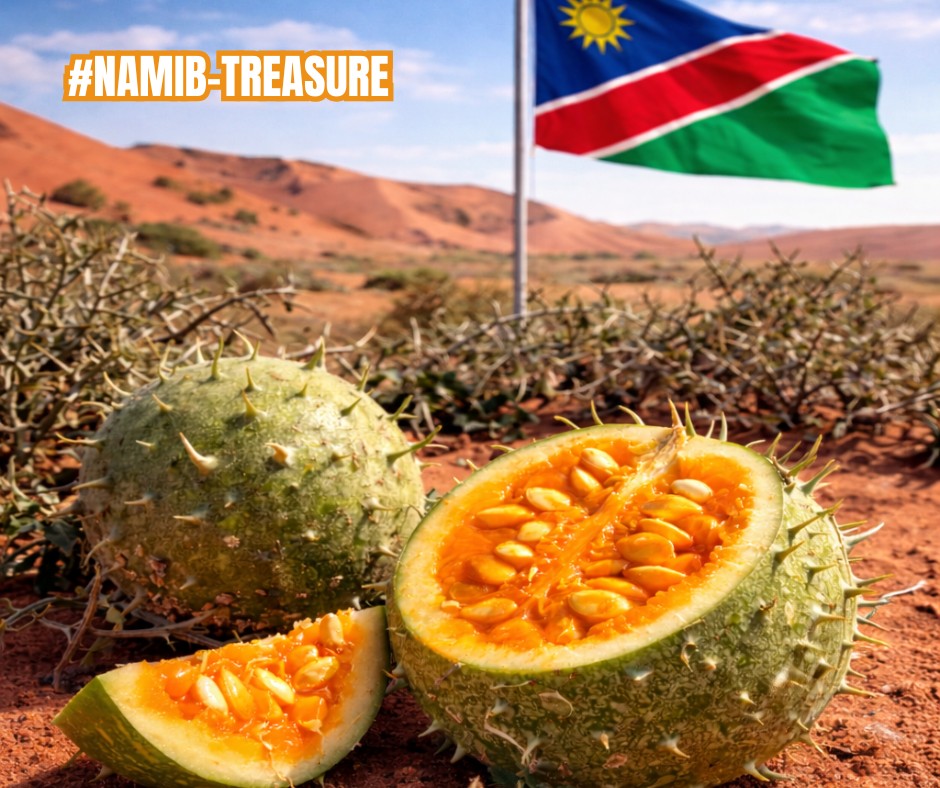
While Namibia does not have an officially designated national fruit in the same way it has a national flower (the Welwitschia) or a national tree, the !Nara (Acanthosicyos horridus) is frequently recognized as the most iconic indigenous fruit of the Namib Desert. It almost never rains in the Namib desert. How a juicy Nara melon can grow and thrive in this environment almost defies biological explanation.
Let’s step into the desert sands and uncover how this thorny survivor sustains life where almost nothing else can grow:
- The fruit can be described as a leafless, spiny shrub that produces large, pale green, spiky melons (up to 1 kg) with sweet, orange-yellow pulp.
- Thrives in the extremely dry Namib Desert, particularly around the Sossusvlei and Walvis Bay area in Namibia, drawing moisture from deep underground and morning mist.
- The fruit is eaten fresh, boiled into a pulp, or dried into “fruit leather”. The seeds, known as “butter-nuts” or “butterpips,” are highly nutritious, eaten as snacks, or pressed for oil.
- Its sand-binding characteristics also help nara form microclimates within the desert dunes. These microclimates provide food and shelter for a variety of vertebrates.
- The fruit serves as a food source for Nama people from February to April and August to September.