Around the World in 40 Fruits – Volume 37 – By Dr. Marli Botha – Article 37 of 40
By Dr. Marli Botha
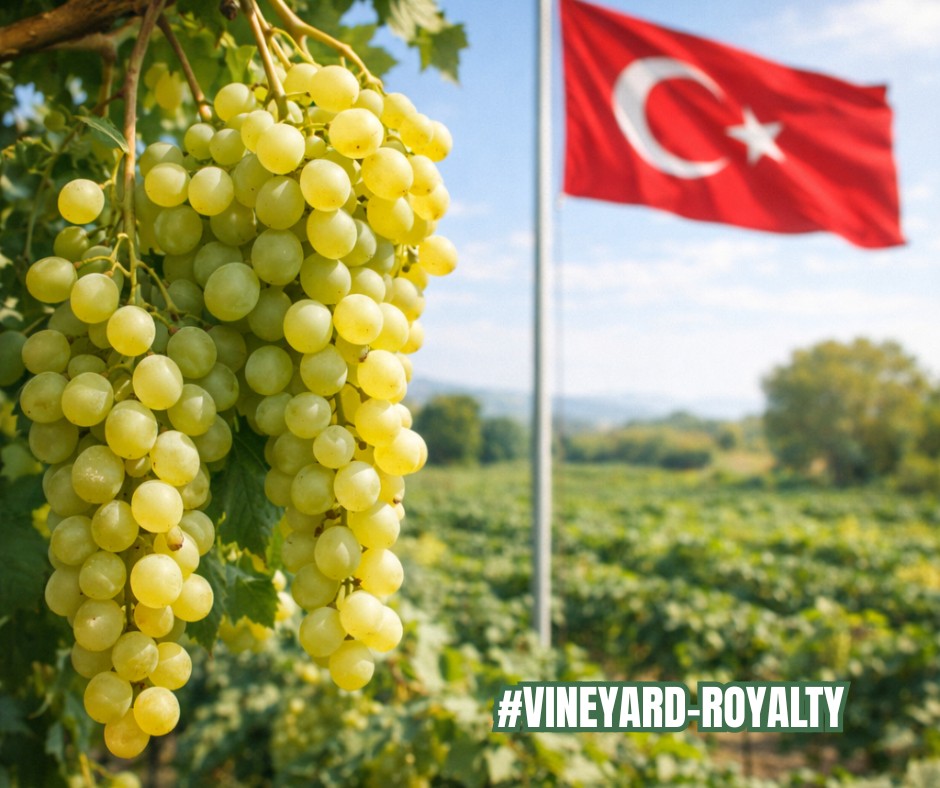
Turkey is a major producer of sultana grapes, which are seedless, white (pale green) Vitis Vinifera grapes, also known as Sultaniye or Thompson Seedless, that are dried to become sweet, golden raisins called Turkish Sultanas, highly valued for baking, cereals, and as a healthy snack due to their high sugar and nutrient content.
Let’s wander through the vineyards and discover why this versatile grape has earned its royal reputation:
- Originated in Anatolia (modern-day Turkey), the name comes from the word “Sultan,” as they were served to Ottoman sultans.
- Often dipped in a solution (potassium carbonate) and dried in the sun, resulting in a lighter color and faster drying than untreated grapes.
- The sultana grape is also used to make white wine, in which use it is known for its “sweet blandness”.
- It is referred to as a “three-way grape” because it is used as a table grape, dried fruit and to make wine.
- Sultaniye is the most common variety for rakı production due to its high volume of cultivation and traditional taste. Rakı is an alcoholic beverage made of twice-distilled grape pomace and flavored with aniseed. It is a national drink of Turkey, and it is especially popular in the coastal regions.
- Sultanas are a nutrient-dense snack, providing quick energy from natural sugars, fiber for digestion, and essential minerals like potassium, iron, magnesium, and copper, alongside antioxidants.