South Africa is famous for its oranges, grapes and apples, but the real treasure hunt starts in the veld. Long before supermarkets, people across the country snacked on marulas under bushveld trees, picked sticky stamvrug in the Magaliesberg and boiled tangy kei apples into jam. Some of these fruits are so local that their best-known names are in Sepedi, Setswana, isiZulu or Afrikaans rather than English.
This guide is your field companion to South African fruits: 15 indigenous wild fruits worth knowing, where they grow, what they taste like and how to enjoy them safely. We also answer the question everyone asks (does South Africa have a national fruit?) and look at the farmed fruits that put the country on the world map.
Which fruits come from South Africa? Indigenous South African fruits include the marula, stamvrug (Transvaal milkplum), mobola plum, red milkwood (moepel or mmupudu), wild medlar (mmilo), sourplum, kei apple, monkey orange, num-num, sour fig, baobab, wild plum, jacket plum, wild date and wild custard apple.
South Africa has no official national fruit. Its official national symbols include the real yellowwood (national tree) and the king protea (national flower). The marula is the fruit most often called the country’s “unofficial” national fruit.
Does South Africa Have a National Fruit?
Here is a fun pub-quiz fact: South Africa has a national animal (the springbok), a national bird (the blue crane), a national fish (the galjoen), a national flower (the king protea) and a national tree (the real yellowwood), but no national fruit. You can check the full list on the official South African government national symbols page.
So which fruit deserves the crown? Most South Africans would vote for the marula. It feeds people, elephants and birds alike, it has been eaten in southern Africa for thousands of years, and it has become a symbol of the bushveld. Many countries do have an official national fruit, and our tour of national fruits around the world shows how different countries chose theirs.
15 Indigenous South African Fruits at a Glance
Use this table to quickly compare the wild fruits in this guide. Scroll sideways on your phone to see every column. Each fruit gets its own profile further down.
| Fruit (other names) | Mainly found in | Taste | Best enjoyed as |
|---|---|---|---|
| Marula (morula, maroela) | Limpopo, Mpumalanga, North West, northern KZN | Tart, tropical, slightly sour | Fresh, jelly, juice |
| Stamvrug (Transvaal milkplum) | Magaliesberg, Gauteng, North West, Limpopo, Mpumalanga | Sweet with sticky latex | Fresh off the stem, jelly |
| Mobola plum (mmola) | Limpopo, Mpumalanga bushveld | Dry, sweet, nutty | Fresh, dried snacks |
| Red milkwood (moepel, mmupudu) | Limpopo, Mpumalanga, Gauteng, North West | Sweet, date-like | Fresh, dried, jam |
| Wild medlar (mmilo, mispel) | Limpopo, Mpumalanga, Gauteng, KZN | Sweet-sour, like apple sauce | Fresh, pulp in drinks |
| Sourplum (suurpruim, Ximenia) | Limpopo, Mpumalanga, KZN, North West | Very sour | Jam, jelly, sprinkled with sugar |
| Kei apple (kei-appel) | Eastern Cape, KZN, Limpopo | Tart, apricot-like | Jam, jelly, with sugar |
| Monkey orange (doringklapper) | Bushveld, Limpopo, Mpumalanga, KZN | Sweet-sour, tropical | Fresh pulp (spit out the seeds) |
| Num-num (Natal plum) | KZN and Eastern Cape coast | Sweet, cranberry-like | Fresh, jam, sauces |
| Sour fig (suurvy) | Western, Eastern and Northern Cape coast | Sweet-sour, salty-sticky | Jam, traditional sweet |
| Baobab (kremetart) | Far northern Limpopo | Tangy, chalky, citrusy | Pulp in drinks and smoothies |
| Wild plum (wildepruim) | Eastern Cape, KZN, Limpopo, Mpumalanga | Sour, plum-like | Jelly, jam |
| Jacket plum (doppruim) | Widespread, Karoo to Limpopo | Sweet, jelly-like | Fresh, jelly |
| Wild date palm (wildedadel) | KZN, Eastern Cape, Mpumalanga, Limpopo | Sweet, small dates | Fresh snack |
| Wild custard apple | Limpopo, Mpumalanga | Sweet, custard-like | Fresh |
Distribution is approximate; many species also grow in neighbouring countries.
Bushveld Favourites: The Fruits of the North
The warm, summer-rainfall bushveld of Limpopo, Mpumalanga, North West and Gauteng is South Africa’s wild fruit bowl. Many of the fruits the Department of Agriculture lists as the country’s most important indigenous fruit crops grow here.
1. Marula (Sclerocarya birrea)
The marula is southern Africa’s superstar. Its plum-sized fruits drop from the tree while still green and ripen to a soft yellow on the ground, releasing a scent that draws people, elephants, antelope and birds. The flesh is juicy and tart, with an aroma somewhere between mango and guava, and it is packed with vitamin C. Inside sits a hard stone holding tasty, nutty kernels that are pressed for oil.
The SANBI PlantZAfrica profile of the marula calls it one of southern Africa’s most valued trees, because almost every part of it is useful. For the full story, read our in-depth guide to the marula fruit.
2. Stamvrug (Englerophytum magalismontanum)
Here is one with a special place in our hearts. The stamvrug’s botanical name literally means “from the Magaliesberg”, the same mountains that gave Magalies Citrus its name. “Stamvrug” is Afrikaans for “stem fruit”, because the bright red, slightly hairy fruits grow in clusters right on the trunk and older branches.
The fruits are sweet but full of a sticky latex, so your lips may feel glued together after a handful. The SANBI profile of the stamvrug describes it as one of South Africa’s more popular veld fruits and a thirst quencher for hikers in the mountains.
3. Mobola Plum (Parinari curatellifolia)
The mobola plum grows on a big, handsome shade tree and produces oval, rough-skinned fruits with a dry, sweet flesh that some people compare to a cross between a date and a nut. It is a favourite with children who know where to look. Get to know it better in our guide to the mobola plum.
4. Red Milkwood, Moepel or Mmupudu (Mimusops zeyheri)
If you grew up in Limpopo, you may know this fruit as mmupudu (Sepedi) or moepel (Afrikaans). The small orange-yellow fruits are sweet and slightly mealy, and they are traditionally eaten fresh or dried for later. Our article on the red milkwood fruit covers its uses and why it is one of the country’s key indigenous fruit crops.
5. Wild Medlar or Mmilo (Vangueria infausta)
Known as mmilo in Sepedi and mispel in Afrikaans, the wild medlar has round brown fruits with a soft, sweet-sour pulp that tastes surprisingly like stewed apple. The pulp can be mixed with water into a refreshing drink. Learn more in our guide to the wild medlar fruit.
6. Sourplum or Suurpruim (Ximenia caffra)
The name says it all. These glossy red fruits are mouth-puckeringly sour, which makes them brilliant for jams and jellies, or for daring friends to eat one straight. Find out more in our profile of the Ximenia sourplum.
7. Monkey Orange (Strychnos spinosa)
The monkey orange looks like a green cricket ball that slowly ripens to yellow. Crack the hard shell and you will find seeds packed in a fragrant, sweet-sour pulp. The SANBI monkey orange profile notes that the fruit can take a long time to ripen and tends to appear after good rains. Eat only the pulp of fully ripe fruit and spit out the seeds.
8. Wild Custard Apple (Annona senegalensis)
A wild cousin of the cultivated custard apple, this small shrub or tree produces yellow-orange fruits with a soft, sweet pulp. Botanists call it Annona senegalensis, and it grows across much of tropical Africa.
Coastal and Forest Fruits
Head south and east towards the coast and the fruit changes. Here you will find hardy shrubs that laugh at salt spray, plus forest trees that shade KwaZulu-Natal and Eastern Cape gardens.
9. Kei Apple (Dovyalis caffra)
Named after the Kei River, this spiny shrub is a favourite living fence on farms. Its round yellow fruits are tart and juicy, a little like an apricot with attitude, and they make an excellent jam. The SANBI profile of the kei apple describes it as a drought- and frost-resistant tree that grows from the Eastern Cape through KwaZulu-Natal into Limpopo.
10. Num-Num or Natal Plum (Carissa macrocarpa)
With glossy leaves, sweet-scented white flowers and bright red fruits, the num-num is as pretty as it is tasty. The fruit tastes a bit like a sweet cranberry and makes lovely jams and sauces. Just eat the red fruit only; the rest of the plant has a milky sap. Botanists know it as Carissa macrocarpa.
11. Sour Fig or Suurvy (Carpobrotus edulis)
The sour fig is a succulent that carpets coastal dunes with pink and yellow flowers. Its fig-shaped fruits are sticky, salty-sweet and sour all at once, and Cape cooks have turned them into a treasured jam for generations. Read more about Carpobrotus edulis.
12. Wild Plum (Harpephyllum caffrum)
You may have walked under a wild plum without knowing it: it is a popular street and garden tree. The dark red fruits are sour and best turned into a ruby-red jelly. See Harpephyllum caffrum for the botany.
13. Wild Date Palm (Phoenix reclinata)
South Africa’s own date palm grows along rivers and in damp spots. Its small orange dates are sweet but thin-fleshed, so think of them as a trail snack rather than a lunchbox staple.
Giants and Oddballs
14. Baobab (Adansonia digitata)
The upside-down tree of Limpopo produces velvety pods filled with a dry, white pulp that tastes tangy and citrusy. The pulp is naturally rich in vitamin C and fibre and is popular stirred into drinks and smoothies. More on Adansonia digitata.
15. Jacket Plum (Pappea capensis)
The jacket plum gets its name from its furry green capsule, which splits open to reveal a seed wrapped in a bright red, jelly-like layer. That sweet red coat is the edible part. Read more about the genus Pappea.
Quick Quiz: Can You Guess the Fruit?
Think you know your veld fruits? Tap each question to reveal the answer.
1. Its name means “from the Magaliesberg” and it grows on the trunk. What is it?
The stamvrug (Englerophytum magalismontanum).
2. Elephants love it, and it ripens after it falls from the tree.
The marula.
3. In Sepedi it is mmupudu, in Afrikaans moepel.
The red milkwood (Mimusops zeyheri).
4. It looks like a green cricket ball and you must spit out the seeds.
The monkey orange.
5. It is called “the upside-down tree”.
The baobab.
How to Forage for Wild Fruit Safely
Picking fruit in the veld is one of life’s simple pleasures, but a few rules keep you, the trees and the wildlife safe.
- Only eat a fruit you can identify with 100% certainty; ask a local expert or use a reputable field guide.
- Pick fully ripe fruit only, and taste a small amount first.
- Ask the landowner before you pick, and never harvest in nature reserves or national parks.
- Take a little and leave plenty for birds, animals and the next person.
- Never break branches or strip bark; many indigenous trees grow slowly.
- Wash fruit before eating, especially near roads.
The Farmed Fruits That Made South Africa Famous
Wild fruits are the heritage, but farmed fruit is big business. South Africa’s Mediterranean Western Cape and warm subtropical north let farmers grow an unusually wide range of fruit, from apples and grapes to mangoes and avocados.
Citrus leads the way. The government announced a record 2025 export season of 203.4 million cartons, and the Citrus Growers’ Association later reported that South Africa was the world’s largest citrus exporter by volume in 2025.
| Fruit | Main growing areas | Fun fact |
|---|---|---|
| Citrus (oranges, lemons, mandarins, grapefruit) | Limpopo, Eastern Cape, Western Cape, Mpumalanga, KZN | Around two-thirds of the crop is exported as fresh fruit |
| Table grapes | Hex River Valley, Orange River, Berg River | Harvested in the southern summer, when Europe has none |
| Apples and pears | Elgin, Ceres, Langkloof | Cool mountain valleys give crisp, colourful fruit |
| Mangoes | Limpopo and the Mpumalanga Lowveld | Peak season brings boxes of fruit at bargain prices |
| Avocados | Limpopo, Mpumalanga, KZN | Tzaneen is often called the avocado capital |
| Guavas | Western Cape, Limpopo, Mpumalanga | The industry is built on the pink Fan Retief cultivar |
Guavas deserve a special mention: the local industry grew from a single South African cultivar, Fan Retief, and our guide to picking guavas explains how to choose a good one.
From Orchard to Glass
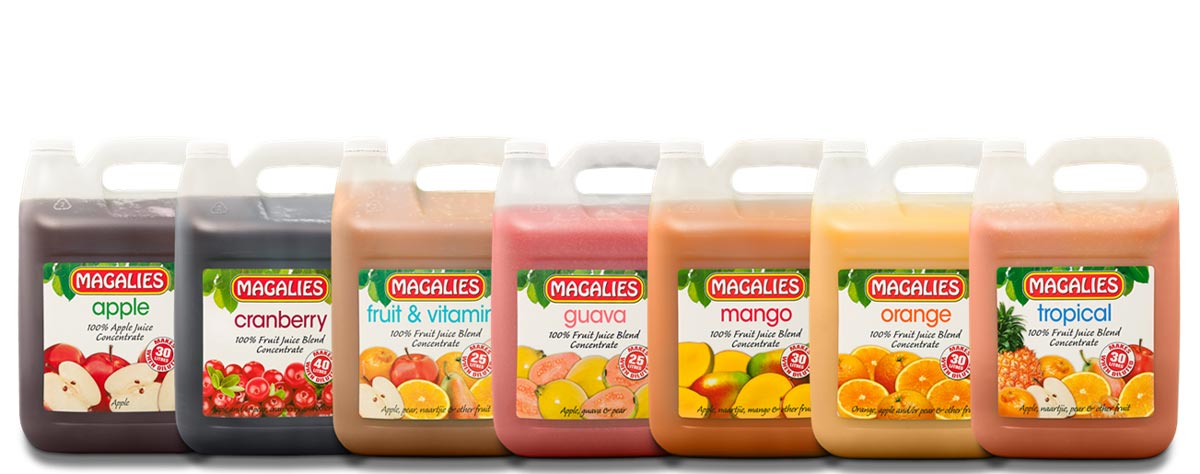
Magalies Citrus has been turning South African fruit into juice since 1959. Citrus is processed in our primary production facility, and the result ends up in everything from our 5-litre 100% fruit juice blends (think Guava, Mango, Orange and Tropical) to family-sized nectar concentrates.
Taste South African fruit in every glass. One bottle of concentrate makes up to 40 litres of juice for family, friends and events.
Explore our juice rangesShop onlineFermentation is another way South Africans have long preserved their harvest; discover the traditional ferments in our article on truly South African fermented foods.
Frequently Asked Questions About South African Fruits
Which fruits are indigenous to South Africa?
Well-known indigenous South African fruits include the marula, stamvrug, mobola plum, red milkwood (moepel or mmupudu), wild medlar (mmilo), sourplum, kei apple, monkey orange, num-num, sour fig, baobab, wild plum, jacket plum, wild date palm and wild custard apple.
What is the national fruit of South Africa?
South Africa has no official national fruit. The official national symbols are the springbok, blue crane, galjoen, king protea and real yellowwood. The marula is often called the unofficial national fruit.
What is mmupudu fruit in English?
Mmupudu is the Sepedi name for the red milkwood (Mimusops zeyheri), also called moepel in Afrikaans. It is a small, sweet orange-yellow fruit from the northern provinces.
What is mmilo fruit in English?
Mmilo is the wild medlar (Vangueria infausta), called mispel in Afrikaans. Its brown fruits have a sweet-sour pulp that tastes like stewed apple.
Can you eat wild fruits in South Africa?
Many indigenous fruits are edible and delicious, but only eat a fruit you have identified with certainty, pick only ripe fruit, ask the landowner first and never harvest in protected areas.
What is South Africa’s biggest fruit export?
Citrus. In 2025 South Africa packed a record 203.4 million 15 kg cartons of citrus for export, and the Citrus Growers’ Association reported that the country was the world’s largest citrus exporter by volume that year.
From the marula under a bushveld sky to a jar of sour fig jam on a Cape farm stall, South African fruits tell the story of the land and its people. Next time you are out walking, look up into the trees. Lunch may be hanging right above you.