Around the World in 40 Fruits – Volume 20 – By Dr. Marli Botha – Article 20 of 40
By Dr. Marli Botha
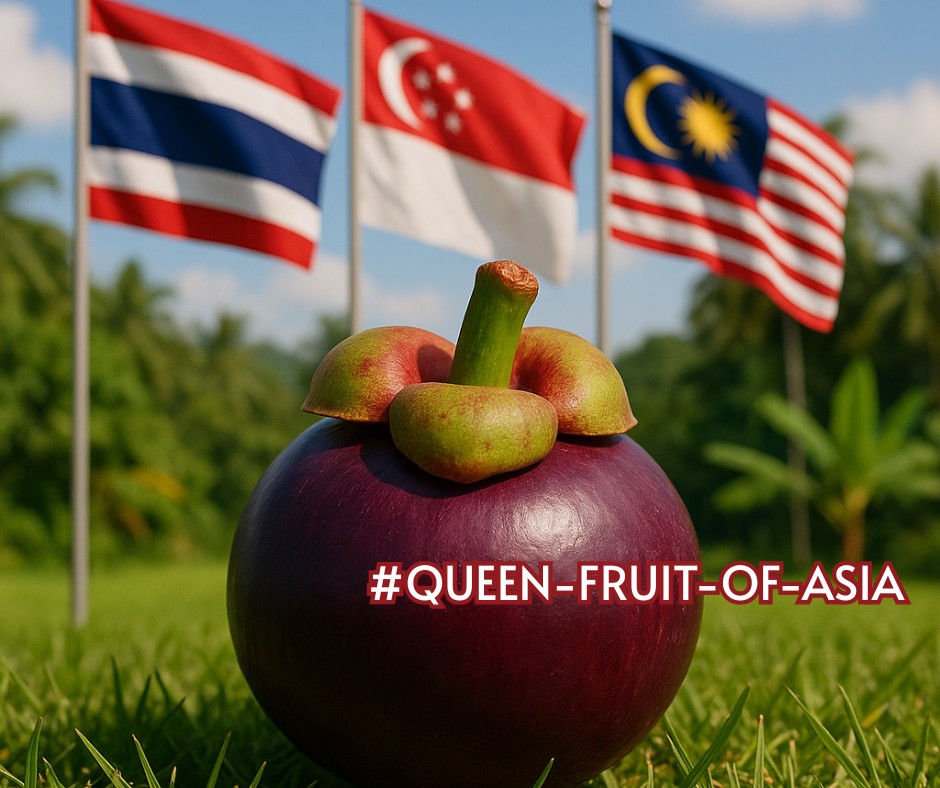
The Mangosteen has been growing wild since ancient times and is native to select regions of Southeast Asia and the Sunda Islands of Indonesia. Some evidence suggests that the tree may have been first domesticated in Thailand or Burma.
Let’s crack open the luscious world of mangosteen – where ancient traditions and tropical perfection meet!
- As a tropical tree, the mangosteen must be grown in consistently warm conditions, as exposure to temperatures below 0°C for prolonged periods will usually kill a mature plant.
- The extract of mangosteen peels is traditionally used in Indonesia as natural dye for coloring of brown, dark brown, purple or red hues applied to tenun ikat and batik textiles.
- Mangosteen is composed of about 80% water, making it an incredibly hydrating fruit. This high water content also contributes to its refreshing taste and juicy texture.
- Individual trees have been reported to yield more than 1,000 fruits in a season, but the plants usually produce good crops only in alternate years.