Around the World in 40 Fruits – Volume 24 – By Dr. Marli Botha – Article 24 of 40
By Dr. Marli Botha
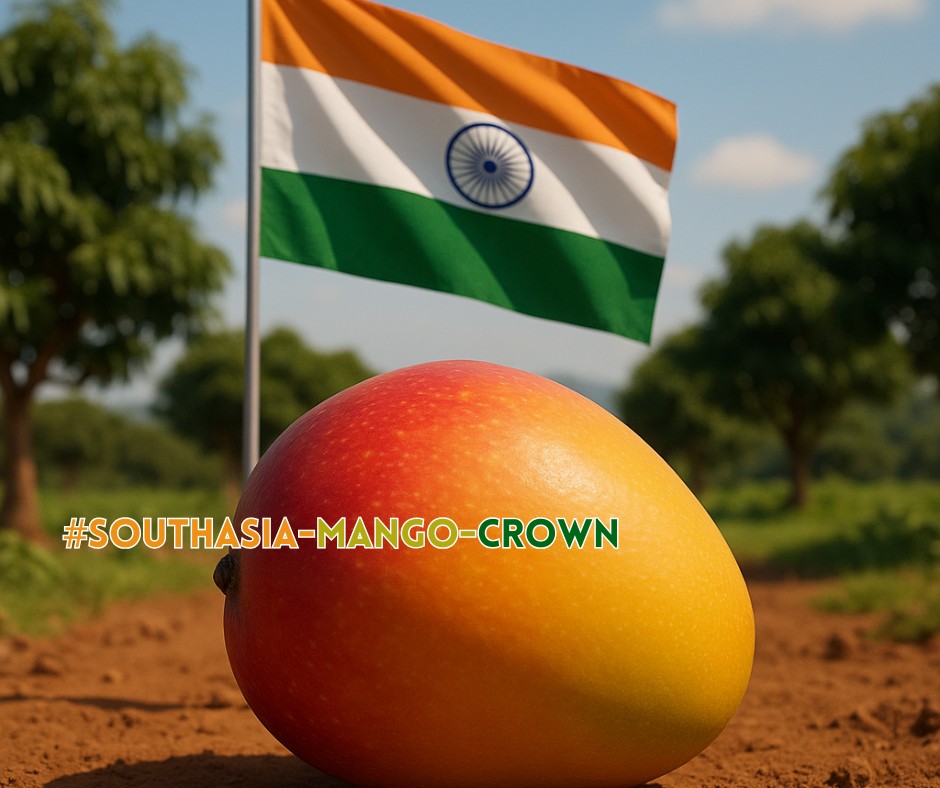
The mango (Mangifera indica L.) is indeed the national fruit of India, Pakistan, and the Philippines. Whilst the mango tree is considered the national tree of Bangladesh.
Let’s take a bite into the legacy of this golden delight – where luscious taste meets longevity and legacy!
- Mangoes belong to the same plant family as cashews and pistachios.
- Botanically, mango is a drupe, consisting of an outer skin, a fleshy edible portion, and a central stone enclosing a single seed – also called stone fruit, like a plum, cherry or peach.
- In India, the mango is known as the “king of fruits” and is often given as a gift, symbolizing love and friendship
- Left unpruned many mango varieties become medium to large trees. Trees are evergreen, with a symmetrical, rounded canopy ranging from low and dense to upright and open. Trees can still bear fruit after 300 years.
- In 2019, the annual mango production in India reached over 18 million tons – roughly 50% of the entire global supply.